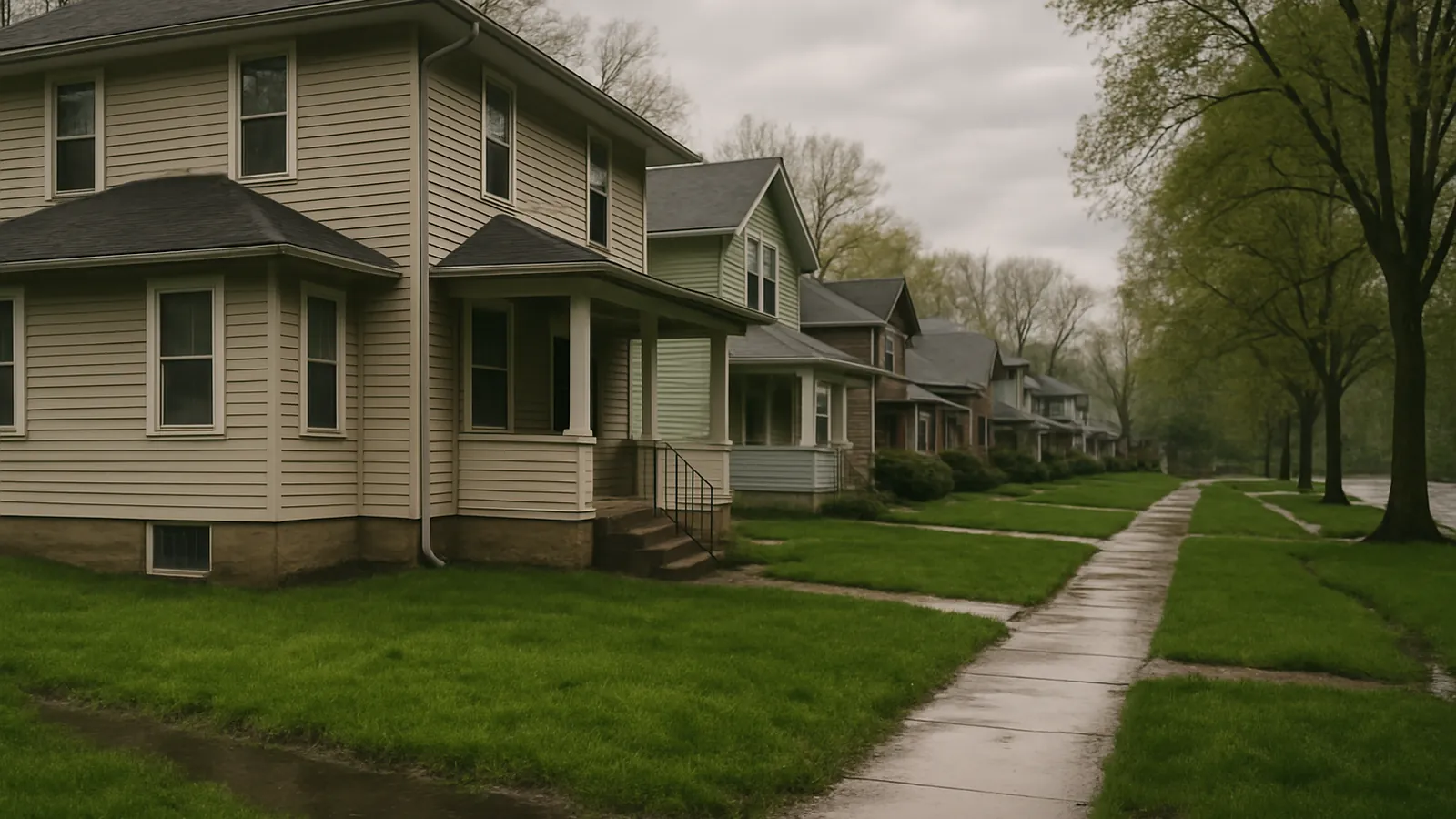
Foundation settlement repair in Fort Wayne runs $4,000–$15,000 for most homes, with piers at $1,200–$3,000 each placed where an elevation survey shows the footing dropped. Allen County’s dense glacial till holds water at a high table, and settlement here is usually saturated soil losing bearing strength.
Why wet till settles, what deep frost adds, and what repair involves here.
Settlement on ground that never dries
Most clay markets settle by drought. Fort Wayne runs the opposite mechanism: the Wisconsin glaciation left dense till and lakebed clays that hold water and release it slowly, the water table sits high across much of the county, and three rivers keep the whole system charged. Chronically saturated till is soft till — it loses bearing strength — and a footing over it eases downward, fastest wherever a drainage fault concentrates the wet: the downspout corner, the low side of a graded lot, the wall where the neighbor’s runoff arrives. Differential settlement — one run down, the rest holding — is what racks frames and prices repairs, and here it maps to water paths, not sun exposure.
The frost floor show
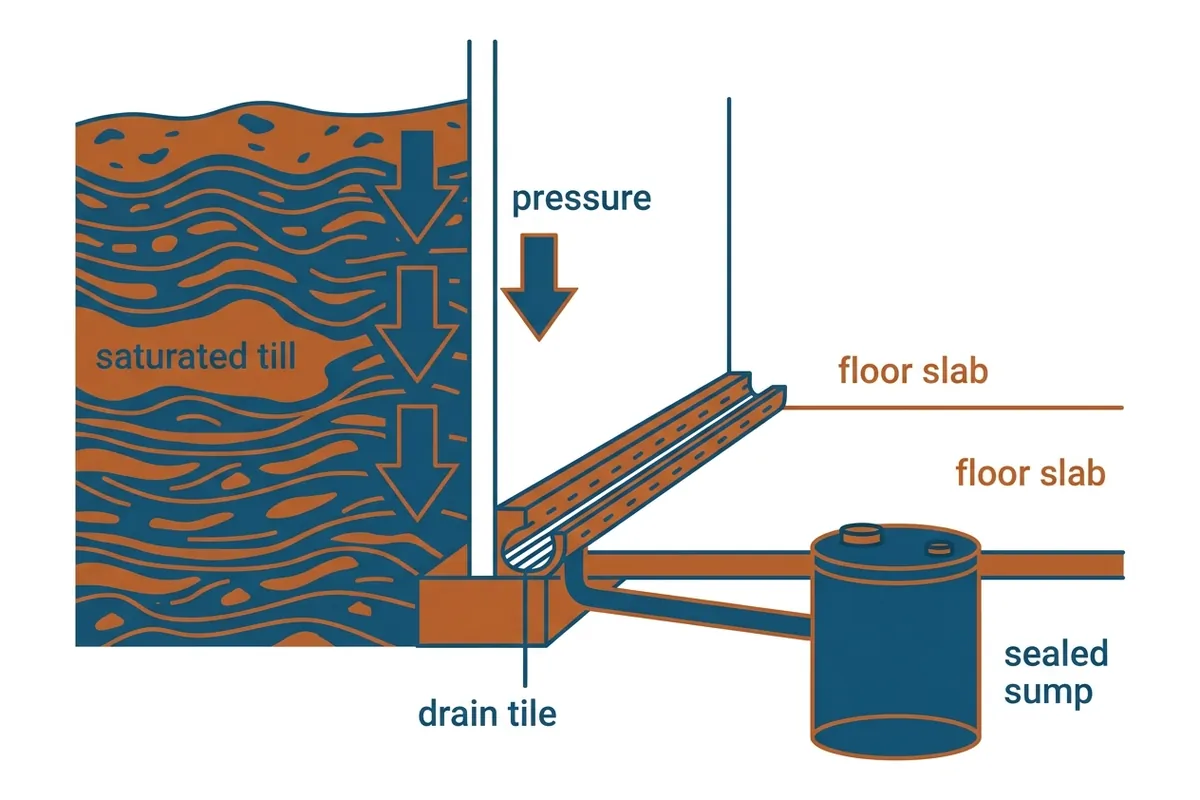
Winter turns the standing water into a jack. Deep northern-Indiana frost freezes the moisture the till holds high, ice expands roughly 9% in volume, and shallow footings ride up and resettle — stoops, porches, garage aprons, and old additions cracking away from their houses every spring. Full-depth basement footings sit below the action, but their walls don’t: the same expansion loads basement walls laterally, stacking a winter mechanism on the summer one. Cycles churn backfill, work cracks wider, and keep the shallow soil loose enough to hold still more water.
The signs, and what each usually means
| What you see | What it usually means | First move |
|---|---|---|
| Stair-step cracks in brick or block | Differential settlement — widest near the dropped run | Photograph, measure widths |
| Stoop or porch pulling away | Frost heave on a shallow footing | Note whether it moves seasonally |
| Dropped run plus a damp or bowing wall | One saturation story doing two jobs | Survey plus the water walk |
| Sticking doors, worse in wet seasons | Saturation-driven movement accumulating | Measure now, compare next season |
| Basement wall crack, wider at top | Footing rotating as it drops | Measure promptly — rotation compounds |
How the repair works
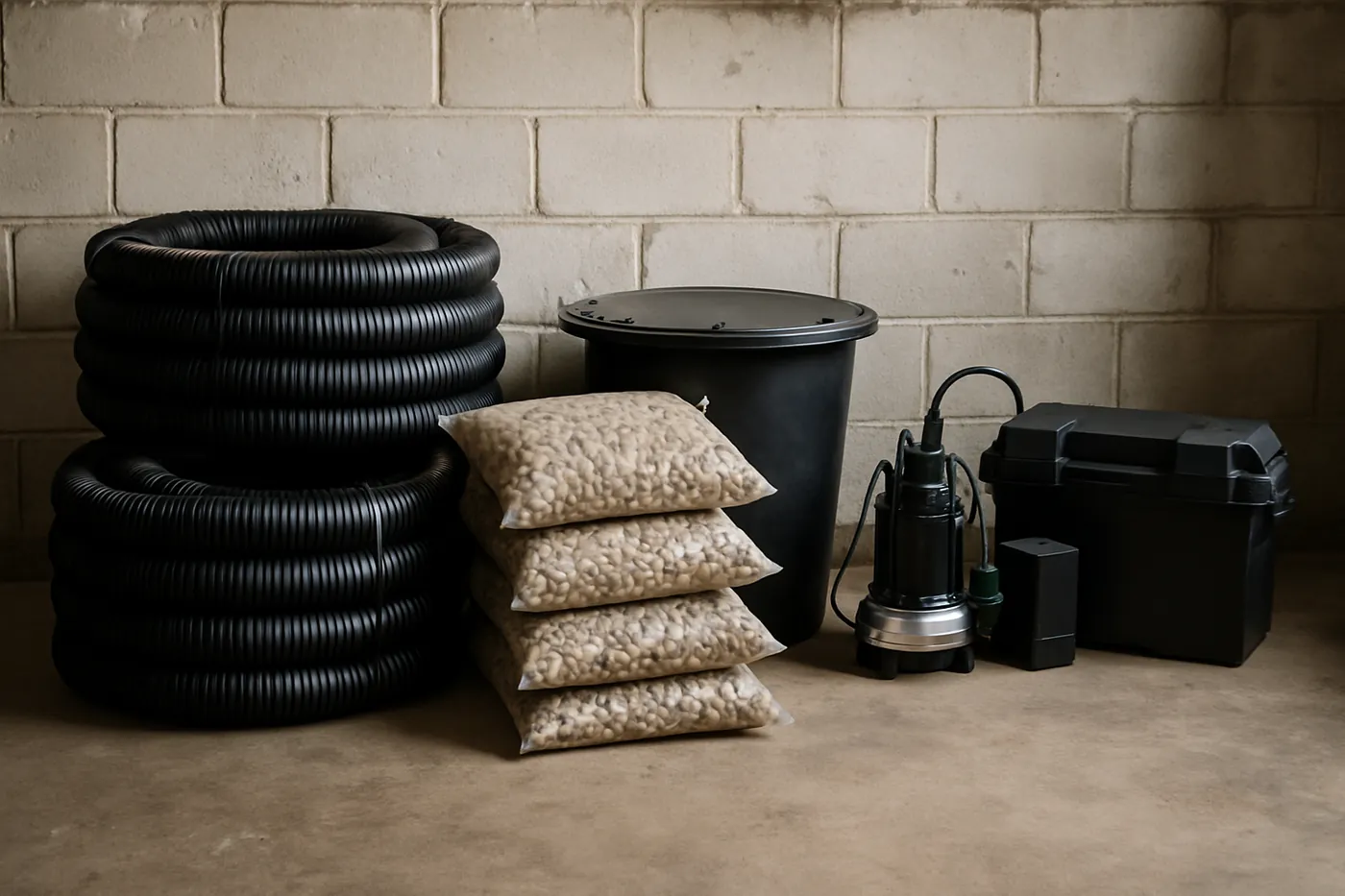
Steel piers carry the footing through the wet upper till to bearing that holds year-round — each pier logged; mechanics live on the piering page, the steel choice on the helical-versus-push page. The Fort Wayne rule: the water gets scoped with the structure, because piers placed in a saturation story without water management leave the cause running. Where the same wet is pushing a wall, restraint joins the scope, and cracked masonry gets injection and stitching once movement is resolved. The cost guide itemizes every range.
The first year after the piers
Piers stop the movement; they don’t erase its history. Give the house a full seasonal cycle before chasing cosmetics — in Allen County that means one wet spring, one dry stretch, and one hard freeze, which is the complete set of forces this ground applies. Hairline cracks can breathe through it, so patch drywall and re-point after the cycle and you patch once. Monitor for free meanwhile: a dated photo and a pencil line across each crack answers “is it still moving?” in ten seconds. Then watch the water, because here it is the parent problem — if the sump ran constantly before the repair, it should still be running, and a pump that suddenly goes quiet in a wet month is telling you something changed.
Settlement questions, straight answers
Why does Fort Wayne settlement usually trace to water?
Because the ground here is wet by default. Wisconsin-glaciation till and lakebed clays hold water and release it slowly, the water table runs high across much of Allen County, and three rivers keep the system charged. Saturated till loses bearing strength — so settlement here is usually soil softening under chronic wet, concentrated wherever drainage faults focus it.
What does the frost cycle add to it?
A yearly lift-and-drop. Water held high in the soil freezes and expands about 9% in volume; under shallow footings that heaves, and the thaw resettles — rarely to the same place. Northern Indiana frost drives deep, which is why stoops, porches, and old additions built shallow crack away from the houses they're attached to every spring.
Which houses show it worst?
Full-basement houses show it richest — which is most of the metro, since basements are the norm here. Eight feet of wall in saturated till takes hydrostatic pressure alongside any settlement, so the same house often presents a dropped footing run AND a damp or bowing wall. They're one water story, and the scope should read them together.
Can drainage fixes stop settlement without piers here?
More often than in dry-clay markets — controlling water addresses the actual cause. A downspout dumping beside a footing in till that never dries is a settlement machine, and correcting it costs a fraction of steel. Once the survey shows real displacement, though, piers do the lifting; the drainage work protects the result.
What does settlement repair cost in Fort Wayne?
Most full repairs run $4,000 to $15,000, with piers at $1,200 to $3,000 each placed where the elevation survey shows loss. Because the cause is usually water, scopes here pair steel with drainage or waterproofing lines more than most markets — priced separately in the same written scope, so you see which dollars stabilize and which prevent.
Get a free Fort Wayne foundation evaluation
Tell us what the basement is doing — water at the cove joint, a wall bowing inward, a horizontal crack in block, floors going out of level — and we’ll schedule an evaluation with photos, wall measurements, and floor elevations. We reply the same business day.