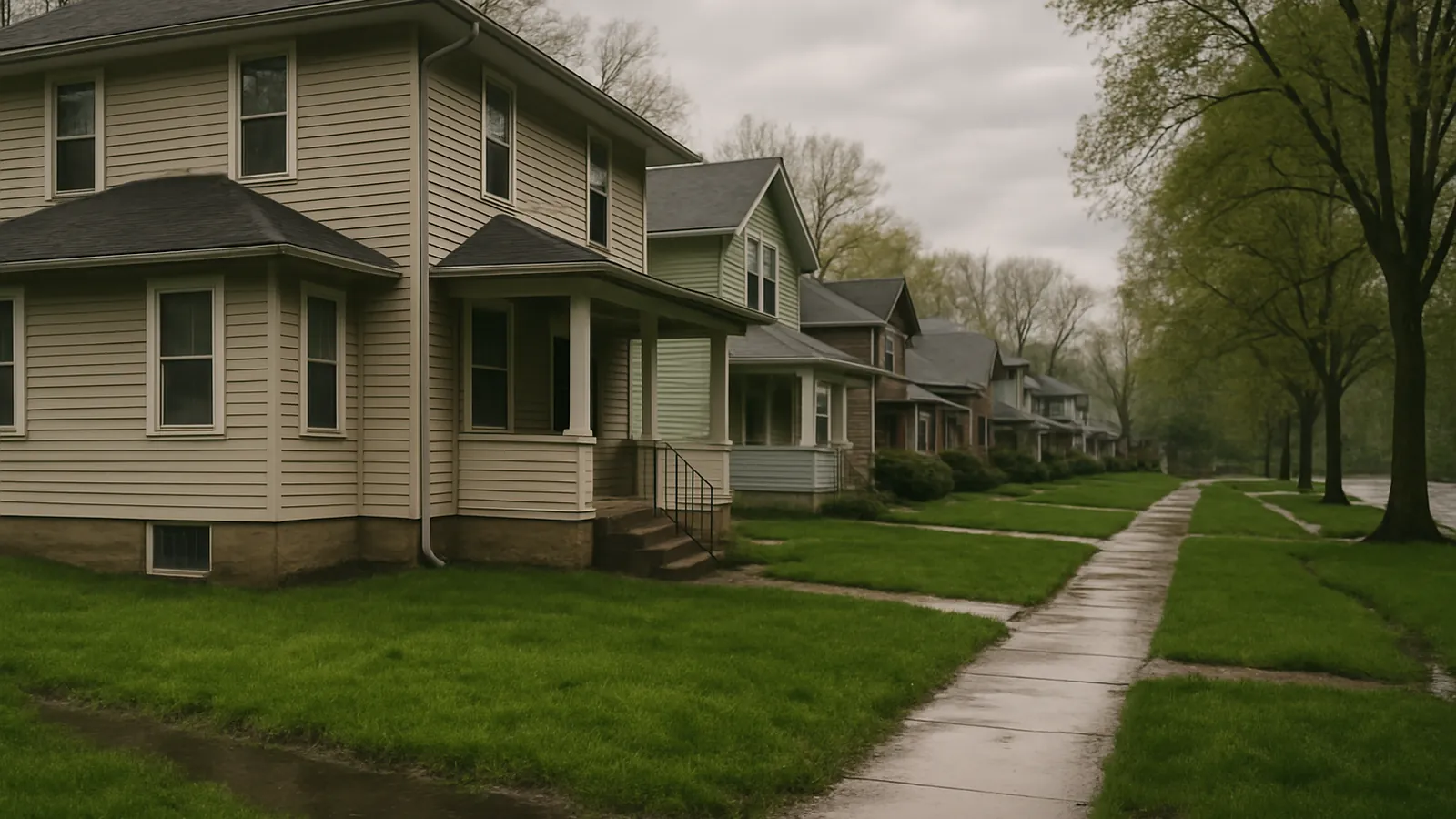
Exterior foundation waterproofing in Fort Wayne seals the wall but requires full-depth excavation; interior perimeter drainage runs $2,500–$8,000 and gives till-held water an exit at the footing. With a high water table and full basements the norm, most homes choose interior drainage plus real sump capacity.
What each buys against a high water table, and why the sump carries this county.
The Fort Wayne condition
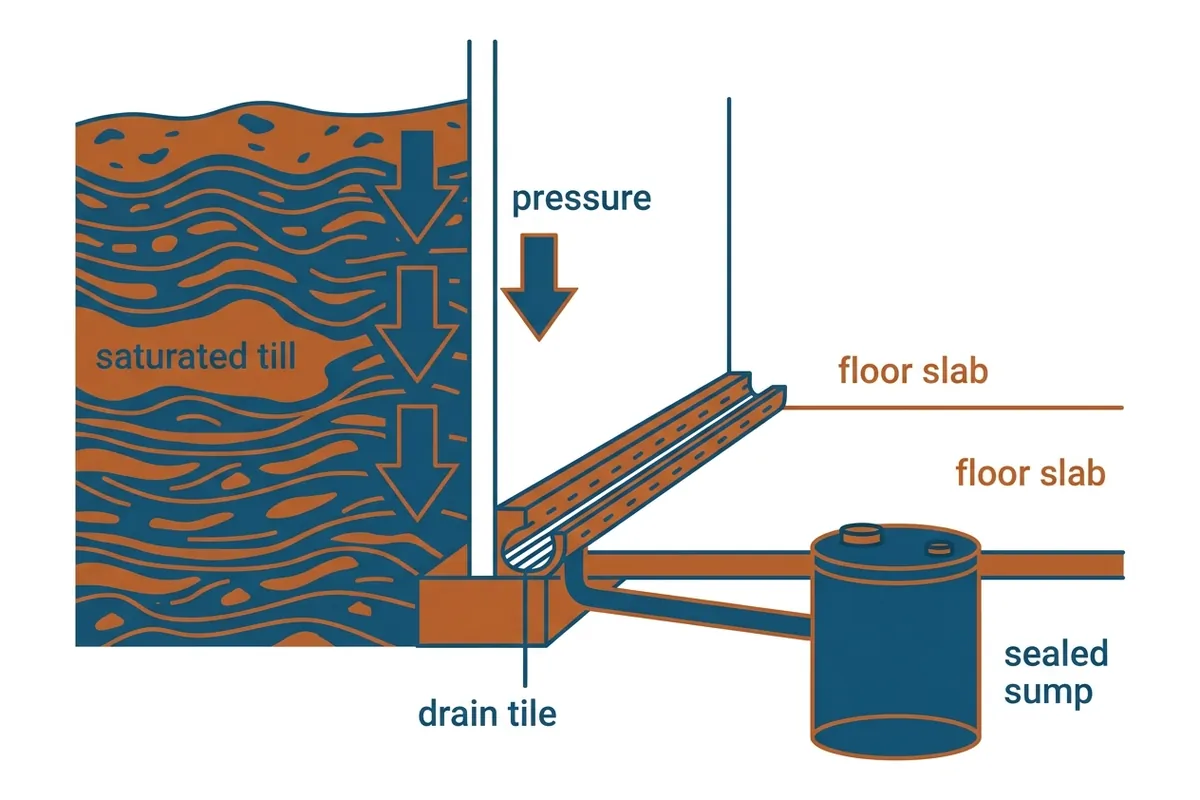
This metro’s water math is unforgiving: 38 inches of precipitation including snowfall that melts in surges, three rivers converging, a water table that runs high across much of Allen County, and glacial till that accepts water gladly and releases it grudgingly. Full basements — the local norm — put eight feet of wall into that system. The result is the region’s defining foundation issue: chronic basement water that isn’t a storm event but a standing condition, pressing seepage and hydrostatic load at every wall and joint. The waterproofing page carries the sump and drainage detail this comparison builds on.
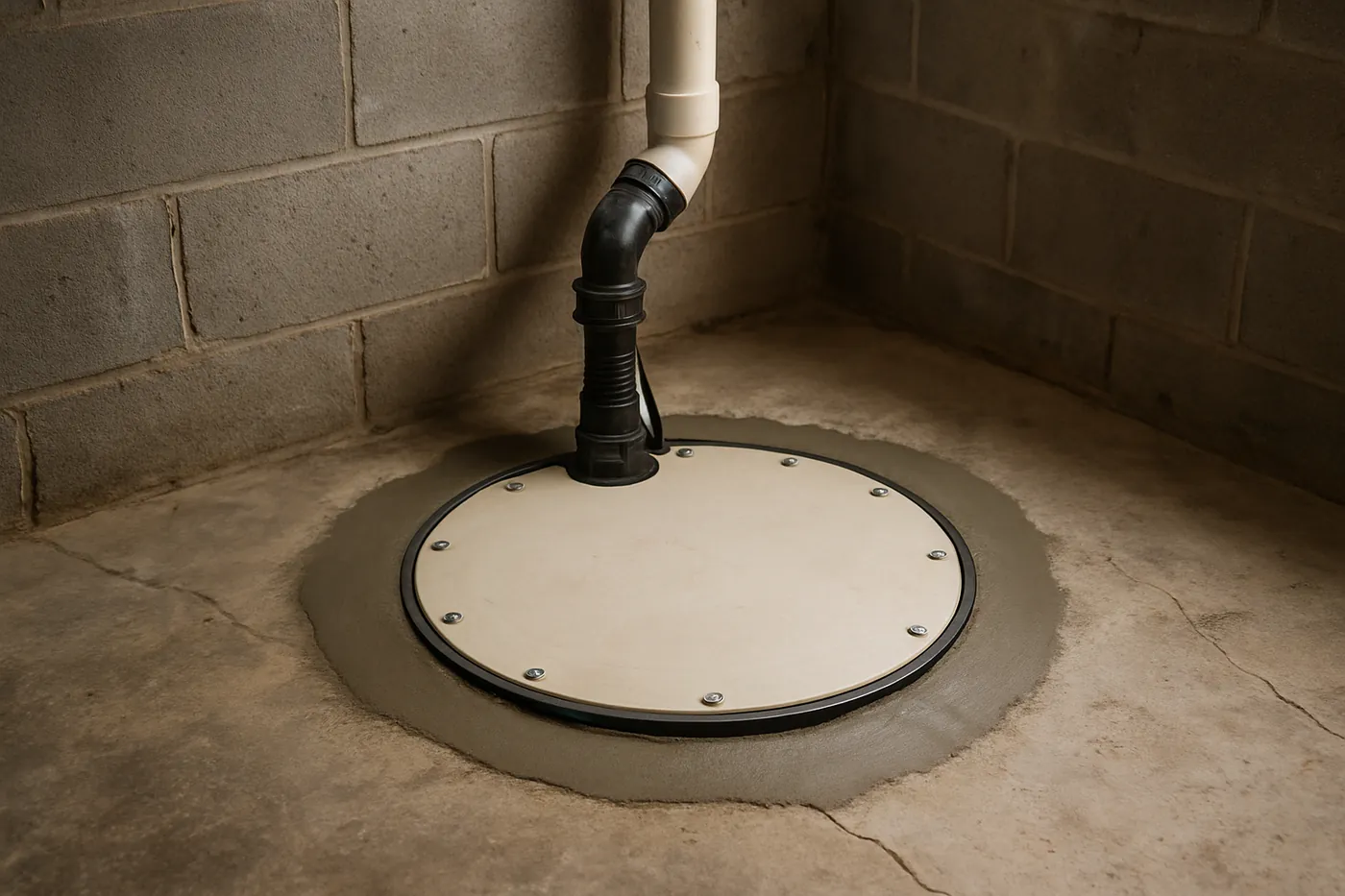
The two systems, honestly compared
| Exterior membrane | Interior drainage | |
|---|---|---|
| Promise | Water stopped at the wall face | Water exits at the footing; floor stays dry |
| Fort Wayne cost | Per wall — excavation dominates | $2,500–$8,000 full perimeter |
| Disruption | Full-depth dig around an occupied house | Interior slab-edge work, days |
| Frost exposure | Coatings ride heave-churned backfill | Below the frost action entirely |
| Water-table pressure | Wall sealed; saturated till still presses | Relieved — the water gets its exit |
| Best case | Wall already open for structural work | Occupied house, chronic seepage, finished basement |
Where waterproofing meets foundation repair
Saturated till pushes as well as seeps, and the bowing basement wall is this county’s companion failure. When restraint work opens the exterior anyway, membrane and a footing drain go in for the cost of materials — the honest case for exterior waterproofing on an existing house. And when the same saturation has already moved the structure, the settlement question resolves first: relevel once, waterproof once. Sequencing lives in the written scope; every price lives in the cost guide.
The sump carries this county
On ground that won’t drain, the sump is the exit — so Fort Wayne systems treat pump capacity, sealed basins, discharge routing, and battery backup as core design rather than add-ons. Snowmelt week is the test: the water arrives all at once, the till holds it against the house, and the pump either moves it or the basement does. Surface routing still comes first — downspouts, grading, discharge — because every gallon kept off the till is a gallon nobody has to pump.
What the system needs from you afterward
An interior drainage system is machinery, and machinery gets a service interval. Twice a year, pour a five-gallon bucket into the sump pit and watch the float lift and the pump discharge — that single test catches most failures before the water does. Check the discharge line where it leaves the house and confirm it still runs well away rather than circling back into saturated soil. Then the Fort Wayne-specific one: before the first hard freeze, verify the discharge can’t ice shut, because a frozen line turns a working pump into a flooded basement in one cold night. Clean the gutters, keep the grade sloped away, and if the pump is over seven years old, price the replacement while it’s still a choice.
Waterproofing questions, straight answers
Why is basement water THE Fort Wayne foundation issue?
Geography stacked the deck. Three rivers converge here, the water table runs high, and the glacial till holds whatever falls — 38 inches a year including snowmelt that arrives all at once. Full basements are the norm, which puts eight feet of wall in ground that's wet most of the year. Basement water isn't a Fort Wayne problem; it's the Fort Wayne condition.
Which system fits that condition better?
Interior drainage, for most occupied houses — a perimeter channel and sealed sump at $2,500 to $8,000 gives the water the till holds a controlled exit at the footing. Exterior membrane seals the wall face but leaves saturated ground pressing on it, costs an excavation, and rides frost-churned backfill for the rest of its life.
When is exterior membrane right here?
When the wall is already open — bowing-wall repairs that excavate, additions, new construction — membrane and footing drain go in for the cost of materials against ground that genuinely tests them. Buying a full-perimeter dig around an occupied house purely for waterproofing rarely beats interior drainage in this county.
How important is the sump system itself?
Here, it's the whole game. On ground that won't drain, the sump is the basement's only exit — which is why Fort Wayne systems get sealed basins, discharge routed well away, and battery backup as a default rather than an upsell. A pump that dies during snowmelt week does more quiet damage here than in any draining-soil market.
What belongs before either system?
Surface routing, aggressively. Downspout extensions, grading that falls away, discharge that doesn't recycle to the wall — on till, every gallon kept away is a gallon the soil never holds against you. It also slows the saturation driving settlement and wall pressure. Every evaluation we run starts at the downspouts.
What part of this can I do myself?
The cheapest part, usually, and often the highest-return. Extending downspouts, clearing gutters, and correcting the first ten feet of grade are homeowner work, and on plenty of houses they solve the problem outright — we would rather tell you that than sell you a system. What is not DIY is anything needing excavation, a footing-level drain, or a sump tied into plumbing and electrical.
Get a free Fort Wayne foundation evaluation
Tell us what the basement is doing — water at the cove joint, a wall bowing inward, a horizontal crack in block, floors going out of level — and we’ll schedule an evaluation with photos, wall measurements, and floor elevations. We reply the same business day.